Showing posts sorted by relevance for query kgalagadi. Sort by date Show all posts

Friday, 4 January 2013

My 2012 in Review

Can you believe we are sitting in the year 2013 already? Every year feels like it's a flyer, but to me personally, 2012 felt like it went by quicker than any previous year. It's obviously a factor of how busy you are and how much you enjoy every day of your life - if you are discontent in everything you do I am sure the days will seem like they never end.

I've not been an avid photographer for very long, but for the past 2 years I compiled a best of post at the end of the year. For some it's a pretty cliche thing to do, but I don't really care, as for me it helps me look back over my photography of the past year, and recall some of the amazing memories that went along with tripping the shutter at specific times and in specific places. Often these memories link me to the adventure that was had, the people I shared it with and the total awesomeness of God's creation that I have the privilege of seeing and photographing.

So, as you can guess from the title, this year I am at it again. I quite like how I did it LAST YEAR, so I will try and follow a similar format,  showing my Top 5 landscape photos, my Top 5 avian (bird) photos and my Top 10 wildlife photos (since wildlife make up the majority of my photographic focus). Also take note that these are not necessarily the best photos I took this year (who can determine that anyway??), they are not even necessarily my favourites (I have not even had time to work through all the photos I took this year properly), but they do epitomize the experiences behind them for me, and that's what I want to showcase. I am grateful to have shared some of these moments with great friends and fellow-photographers like +Felix Reinders+Marlon du Toit+Andrew Aveley and +Gerry Van der Walt.

Shall we begin??

PS: click on the photos to display at best sharpness/resolution...
_______________________________________


TOP 5 LANDSCAPES

1. Ruined Sunset (February)
Mpumalanga Highveld, South Africa


Nikon D3s  |  Nikkor 14-24mm f2.8   |   f11   |   ISO-200   |   Blend of 3 exposures for dynamic range
I would be a bad photographer in my own book if I didn't include an image in this piece that was taken close to home. Most of us just cannot be out in the field all the time (present company included), and it's important to find some local spots to explore and practice your art and fieldcraft on...whether this be a local birding hotspot or a spot with nice views for landscape photography. This old farmyard ruin is located on the farm of a family friend, about 20km from my house. I try to get out there whenever I see a great sunset brewing...you see I live in a place that is quite flat and featureless, but has awesome skies and summer stormy skies. I would be the first to admit that I don't utilise this aspect to its full potential. Perhaps a good resolution for 2013...


2. Kalahari Rainscape (March)
Kalahari desert, South Africa


Nikon D7000  |  Nikkor 70-200mm f2.8 VR-II  |  f8  |  1/1000 SS  |  ISO-200
You should know by now that I am really passionate about the Kalahari desert, specifically the Kgalagadi Transfrontier Park. This year we made our first visit in the midst of the rainy season, and found the semi-desert surprisingly green. Thundershowers were a daily occurrence, and this one was photographed in a very isolated part of the park as we sat waiting for some wildlife at a waterhole.


3. Zambezi Nights (June)
Mana Pools, Zimbabwe


Nikon D3s  |  Nikkor 14-24mm f2.8  |  f2.8  |  30sec SS  |  ISO-3200
Camping in Mana Pools National Park on the banks of the mighty Zambezi river in Zimbabwe was one of the highlights of my year. I've never been to a more pristine and more remote place, a last vestige of truly wild Africa. This photo was captured viewing the course of the Zambezi to the west, towards the very far-off Indian Ocean. To join me in Mana Pools on a safari next year, click HERE.


4. Dawn in the Wilderness (June)
Zambezi river, Zimbabwe


Nikon D3s  |  Nikkor 24-70mm f2.8  |  f11  |  ISO-200  |  Blend of 3 exposures for dynamic range
Staying in Mana Pools, here is the sunrise over a slinking stream in the riverbed of the Zambezi. This was in the middle of the dry season - in the summer you would not see open land in this broad riverbed. Standing here and witnessing this was like watching the sun rise over Africa for the first time, and for a moment I imagined that I was Livingstone...


5. Castle Rock Ablaze (December)
Brenton-on-Sea (Knysna), South Africa


Nikon D800  |  Nikkor 24-70mm f2.8  |  f16  |  8sec SS  |  ISO-200
My last selection for the landscape portion of this overview was taken right before Christmas on the beach of Brenton-on-Sea in the midst of torrential rain and lightning overhead (wouldn't you risk it a bit for this kind of light?). Andrew Aveley, a fellow Wild Eye ambassador, shared this glorious sunset with me. I rue the fact that I didn't explore more compositions, but truth be told I was struggling more to keep my camera and lens dry than I was focusing on changing the composition here.

I did not do enough proper landscape photography in 2012, and that's something I hope to remedy in the coming year, as it's something I really enjoy doing. Let's move on to the feathered friends.


TOP 5 AVIAN

1. Bob the Builder (January)
Pilanesberg National Park, South Africa


Nikon D3s  |  Nikkor 500mm f4 VR-II  |  1.4x teleconverter  |  f8.0  |  1/2500 SS  |  ISO-1800
This is a photo I had been wanting for a long time: a Southern Masked Weaver returning to his nest-under-construction with new building material. I captured this photo in the Pilanesberg National Park, South Africa. I had to pre-focus on the nest, dial in enough depth-of-field and keep my non-camera-bound eye open to anticipate his return.


2. Rocket Landing (February)
Marievale Bird Sanctuary, South Africa

Nikon D3s  |  Nikkor 500mm f4 VR-II  |  f8.0  |  1/8000 SS  |  ISO-4000
Few South African bird species present as much of a photographic challenge as the lightning fast little Malachite Kingfisher. I was fortunate to capture this frame one morning at the Marievale Bird Sanctuary in South Africa.


3. The Secretary
Kgalagadi Transfrontier Park, South Africa


Nikon D3s  |  Nikkor 500mm f4 VR-II  |  1.4x teleconverter  |  f5.6  |  1/1600 SS  |  ISO-640
I posted a Secretary Bird taking off in my selection last year too. This one was taken in the last light of day in the Kgalagadi Transfrontier Park. The bird was flying right above the South African border with Botswana, coincidentally, at this point.


4. Incoming Kite
Kgalagadi Transfrontier Park, South Africa


Nikon D3s  |  Nikkor 500mm f4 VR-II  |  f5.6  |  1/2500 SS  |  ISO-800
We witnessed a strange phenomenon during our February/March visit to the Kalahari. Hundreds of Yellow-billed and Black Kites had congregated in the Nossob riverbed to feed on some sort of termite or insect spawn brought on by the summer rains. It was a joy to watch and photograph them from the Nossob rest camp hide. This is a Black Kite coming in for a landing.


5. Wet Look (April)
Greater Kruger National Park, South Africa


Nikon D3s  |  Nikkor 500mm f4 VR-II  |  f4.0  |  1/500 SS  |  ISO-2500  |  EV +3
The Burchell's Coucal is normally a secretive bird, preferring thickets and dense foliage - very often heard and not seen. On a rainy day in the Sabi Sands Game Reserve I found this one looking wet and miserable out in the open. I made sure to overexpose for the bright sky behind the bird, and came away with some interesting high-key photos.


TOP 10 WILDLIFE

It was REALLY hard to pick only 10 out of this year's crop of wildlife images. It's been a great year for me in terms of building my portfolio and getting some very interesting images (at least in my own mind - though I hope you'd agree after this post). Again, I am arranging them chronologically as the year progressed, and not in order of personal preference.


1. Speedy Siblings (March)
Kgalagadi Transfrontier Park, South Africa


Nikon D3s  |  Nikkor 500mm f4 VR-II  |  1.4x teleconverter  |  f5.6  |  1/800 SS  |  ISO-1400
I've been treated royally by the Kalahari cheetahs on my recent trips to the Kgalagadi Transfrontier Park. On this particular occasion, Felix Reinders and I followed a cheetah mother and her 3 adolescent cubs as they walked up the Auob riverbed. Suddenly the youngsters got a surge of energy and started frantically chasing each other. I ended up with "too much lens" as they hurtled closer at full speed but came away with some keepers. Those who prefer bird photography to mammal photography often bemoan the static nature of much of the mammal species for much of the day. I must agree that one has to be even more patient and have some luck on your side to get good action photos of mammals.


2. Who's the king now? (March)
Undisclosed Location


Nikon D7000  |  Nikkor 70-200mm f2.8 VR-II  |  f8.0  |  1/320 SS  |  ISO-450
The light may not have been the best, but as a sighting this just rocked. Imagine a coalition of 4 male lions in their prime, kings of their domain, lounging around and surveying their territory. Enter a crash of white rhinos...who smell the lions and come closer for investigation...causing the lions to get up quickly and saunter away disgruntled at having to give up their comfortable resting spot. Moments later the agitated rhino bull chased one of its kids and one of the lions right past us (missing us by meters). Seeing the interaction between these 2 members of the Big 5 was special.


3. A stroll in the forest (June)
Mana Pools National Park, Zimbabwe


Nikon D3s  |  Nikkor 500mm f4 VR-II  |  f5.6  |  1/640 SS  |  ISO-2000
You'll inevitably see a few images from this trip in this selection. It was a defining part in my photographic year and one that moved the iconic location of Mana Pools to the top of my list of favourite safari destinations in Africa. Marlon du Toit and I spent an entire day following these elephant bulls on foot as they went about their business. The light and forest setting makes this magical and has etched this moment in my mind for a long time to come.


4.  A Fine Balance (June)
Mana Pools National Park, Zimbabwe


Nikon D3s  |  Nikkor 500mm f4 VR-II  |  f5.6  |  1/500 SS  |  ISO-1250
There's a good chance you've seen this one shared on social media this year. It also got some nice publicity through news syndication as a news story. I captured this on the same morning as the previous photo. Some elephant bulls in the Lower Zambezi valley have learned how to reach the juiciest, most succulent leaves in the massive trees. Remember that you can join us on safari in Mana Pools in July 2013. You can find more details HERE.


5. Lazy Dog (June)
Mana Pools National Park, Zimbabwe


Nikon D3s  |  Nikkor 500mm f4 VR-II  |  1.4x teleconverter  |  f5.6  |  1/400 SS  |  ISO-1800
We also spent 2 afternoons in Mana Pools flat on our bellies in a sandy riverbed with a pack of highly endangered African Wild Dogs. Prior to this year I had just about zero usable photos of this species in my portfolio. With fewer than 5,000 individuals estimated to survive in the wild, this species is on the brink of a disaster...and it's a shame as they are fascinating mammals. You can find out more about this species and the conservation efforts in Zimbabwe at www.painteddog.org.


6. The Approach (June)
Mana Pools National Park, Zimbabwe


Nikon D3s  |  Nikkor 500mm f4 VR-II  |  1.4x teleconverter  |  f6.3  |  1/320 SS  |  ISO-5600
Not only did we spend some time observing this pack of canines from a safe distance, taking some nice photos...the Alpha Male decided to take a closer look at us on the 2nd afternoon...and came to within 10 meters from us, before plopping down and lying next to us for a few minutes. A totally exhilarating experience that I shall not soon forget! This image is not cropped - it's shot full frame in portrait mode! You can read more about this experience HERE.


7. King of the Kalahari (November)
Kgalagadi Transfrontier Park, South Africa


Nikon D3s  |  Nikkor 500mm f4 VR-II  |  f8.0  |  1/1250 SS  |  ISO-450
The next few posts are all about the lions. Though the Kalahari is traditionally a great place for viewing lions, I've mostly had average photographic opportunities of them during previous trips. Not during our November trip (which was an unplanned one), which was lion-infested! This is the most regal, majestic and beautiful male lion I have ever seen in the wild. We found him on 3 occasions, and on this morning he was patrolling his territory with a confident stride, roaring loudly with a blood-covered face from the previous night's feed. Look at that specimen! I have seen many many lions in my lifetime...and none of them come close to this guy.


8. Eyes on the Prize (November)
Kgalagadi Transfrontier Park, South Africa


Nikon D3s  |  Nikkor 500mm f4 VR-II  |  f5.6  |  1/800 SS  |  ISO-3200
During our recent Kalahari safari I was privy to witnessing (and photographing) an entire lion kill from planning to mealtime. I will do a proper blog post about this sighting soon! This frame was pre-visualised and executed at the only moment that it could be achieved. It's not often that I am able to really capture a whole story and so much context into one shot. The tensely poised huntress, the dawn breaking in the background, the open setting, the seemingly blind eland antelope, the anticipation of what's to come. 

 If I had to choose an absolute favourite for the year, I think this photo would be it...


9. Lion in Flight (November)
Kgalagadi Transfrontier Park, South Africa


Nikon D3s  |  Nikkor 500mm f4 VR-II  |  f5.6  |  1/800 SS  |  ISO-2500
This frame was taken shortly after the previous one. The chase started in a frenzy and I was able to track the leading lioness for quite a few seconds, getting a number of sharp shots. This was my favourite pose, with her running through the dust kicked up by her prey. It's sad to think that these magnificent and iconic cats face a dire future, with their numbers plummeting to a mere 30,000 odd left in the wild. Please check out www.lionaid.org and www.causeanuproar.org for more info on the lion epidemic and how to get involved.


10. Crashing
Undisclosed location


Nikon D3s  |  Nikkor 500mm f4 VR-II  |  f8.0  |  1/640 SS  |  ISO-1800

In the light of the recent Rhino Poaching crisis (well, it's not that recent anymore, is it?) I felt compelled to include an image showing these docile giants. A staggering 633 rhinos were illegally poached in 2012 (as at 19 December - stats HERE), almost 200 rhinos more than 2011 and 300 more than in 2010, bringing the total poaching figure since the end of 2009 to a mind-boggling 1414. At the moment it doesn't seem like there is much that can be done to curb this alarming trend, fueled by a newly wealthy Asian market that falsely believes that the horn has medicinal properties. For more info, check out the SAVE THE RHINO and STOP RHINO POACHING campaigns.
 

11. Kiss me Please (bonus image)
Kgalagadi Transfrontier Park, South Africa

Nikon D3s  |  Nikkor 500mm f4 VR-II  |  f8.0  |  1/1000 SS  |  ISO-360


I'm including this one as a bonus because it's a fun moment and to show you that I don't just focus on the large and iconic African species. If you look at last year's post you'll see bigger specie-variety, this year just panned out to be a great year for me in terms of the larger and more "typically African" mammals.

____________________________________________________


 There you have it, friends. I would love for you to tell me which was your favourite of this selection - and why! Drop me a comment on this post and let me know. I hope 2013 holds great light and great sightings for you all.

One more thing - this year saw another increase in our household! Since I posted a photo of our daughter last year, I better post a photo of our son this year lest they compare these posts years later. This is little Daniël!


Keep well, and keep shooting!

Morkel Erasmus

Wednesday, 22 February 2017

South Africa: Rich in National Parks

During my (relatively short, I might add) lifetime I have had the privilege of visiting the majority of South Africa’s national parks and game reserves. What a wealth of natural heritage we possess! 

When people from abroad look at some of the work in my photographic portfolio, they are amazed at the diversity of wildlife and landscapes that we have 'on our doorstep', so to speak. We need to appreciate it, conserve it and foster a love for this natural heritage among all South Africans from all walks of life.

If we don’t, we might just lose it before our children have the chance to see what we see now. Many iconic species of fauna are already at risk (think rhinos and wild dogs), and the constant threat of mining and industrial development in areas of pristine natural beauty is something that won’t go away soon.

Here are some scenes from a couple of well-known and lesser-known parks and reserves that are both accessible for people who self-drive and self-cater, and reasonably affordable.

Kruger National Park


A herd of buffalo on the Mphongolo River near Punda Maria in the Kruger National Park.


Everybody’s favourite reserve, this park spans a massive 2-million hectares (approximately) and contains beautiful scenery and fauna. The southern region is very popular and therefore can get very crowded. I prefer to visit the quieter and more scenic northern regions - and if you search my blog you will find numerous posts about my forays in to this iconic national park.


A young spotted hyena in the rain in the Kruger National Park.

Kgalagadi Transfrontier Park


If you are a keen wildlife photographer there is no better place, in my opinion, than the Kgalagadi. Remote, arid and teeming with life, this is a place where silence and serenity seep into your soul. This park is situated in the Kalahari desert, with wide open spaces and red soil. 


My blog archives have extensive posts and images from this place, as it's a favourite of mine.

A black-maned Kalahari lion strides across the vast expanse of the Kgalagadi.


A cheetah family playing on the red dunes of the Kgalagadi


Golden Gate Highlands National Park


A grand view over the sandstone formations of the Maluti mountains in the Golden Gate Highlands.

The jewel of the Eastern Free State, this park encompasses iconic sandstone formations, the Maluti Mountains, and a wide array of life forms like zebras, black wildebeest, many birds and small mammals, reptiles and insects.


The ungainly secretary bird - this one took off on the slopes of the Maluti mountains in the Golden Gate Highlands.


Mountain Zebra National Park


Cape mountain zebras - endangered but recovering well thanks to the MZNP.

This relatively unknown gem is a wonderful place to experience the Karoo as it once was - recent re-introduction of cheetahs and lions has made for an even bigger drawing card. It's got amazing backdrops and vistas, and the sense of space and solitude that is so typical of the Karoo.


Two blesbuck males duel at dawn on the escarpment of the MZNP.

Addo Elephant National Park


Two young elephant bulls test their strength at a waterhole in Addo.

Sporting the Big 5 (Big 7 if you count the great white shark and the Southern right wale in the ocean section), in a malaria free zone and close to the Port Elizabeth airport, this is a popular destination for people visiting the Cape area and wanting to add a wildlife experience.


Pilanesberg National Park


A pied kingfisher landing on a branch next to the Mankwe dam in Pilanesberg.

Though this park doesn’t fall under the mantle of the South African National Parks, it’s sometimes called a national park and is a very popular destination for nature lovers close to Gauteng.  Besides hosting the Big 5, the Mankwe Dam, with its large bird hide, is popular among birders and bird photographers.


_________________________________

I hope that this quick overview has inspired you to visit more of the well-known and lesser-known wilderness areas left in our country. Get out, explore, photograph, conserve, and communicate!


Morkel Erasmus
Sunday, 28 October 2012

Kgalagadi: September 2009 (Part 1)

As I stated in my previous post, I will start updating my blog with some trip reports, back-dating to about middle 2009 to try and give you a better sense of my travels and the development of my photography over the years. As these trip reports become current, I will try and also keep up to date after recent ones. This will also force me to process the masses of images still lying on my hard drives.

Kgalagadi Transfrontier Park - September 2009
More info: http://www.sanparks.org/parks/kgalagadi/

We had planned a week-long trip (8 nights) to this iconic park as a way to get re-acquainted with the place. I had last been here in 1995 as a lad in 7th Grade (with my folks). Back then we had promised as a family to return every year...but we never did. This time, with me having my own family I decided to honour that tradition. I can also duly say that after this initial comeback trip, have stuck to the tradition of returning at least once per annum, as this amazing place surely warrants it.

I won't go into too much detail, but will try to give you some idea of the better sightings we had, as well as some impressions of the Park and its facilities. Where I may have encountered a challenging photographic situation, I will share some of my thoughts behind the choices I made and settings I used. Kapeesh? Also take note that many of these images were edited/processed way before I knew anything about proper image preparation - and to be quite frank I don't have the time to re-process everything...

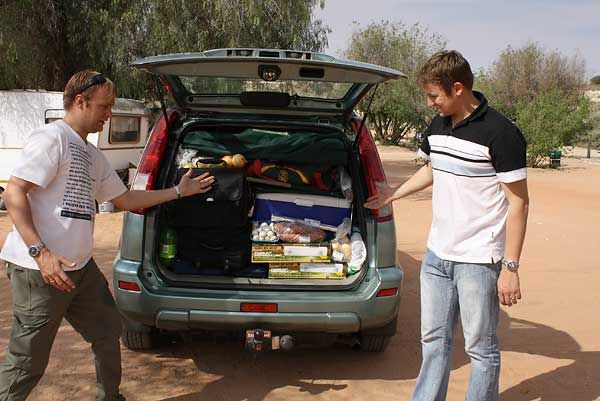
First off, this trip was a planning and packing nightmare. We were 2 couples, had to bring all our food and also all our camping equipment as a good part of the trip would be spent camping. This is how we had to pack my Nissan X-trail that I was driving at the time. Any other packing configuration, with one item not in its place, resulted in something left on the ground with no space to put it!


Twee Rivieren Rest Camp

We started off our Kalahari trip like most visitors here do, by staying over in the main entrance camp, called Twee Rivieren. Here we had to set up camp, which luckily went quickly with everybody pitching in.

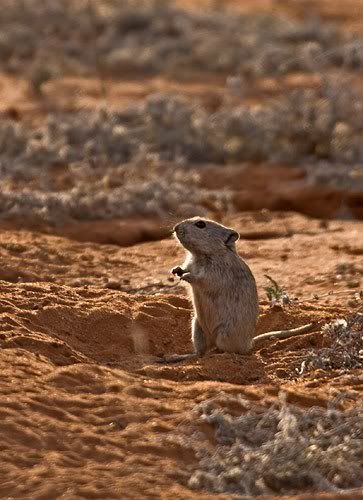
Our first afternoon's drive didn't deliver anything exciting, but I found this Whistling Rat quite cute.


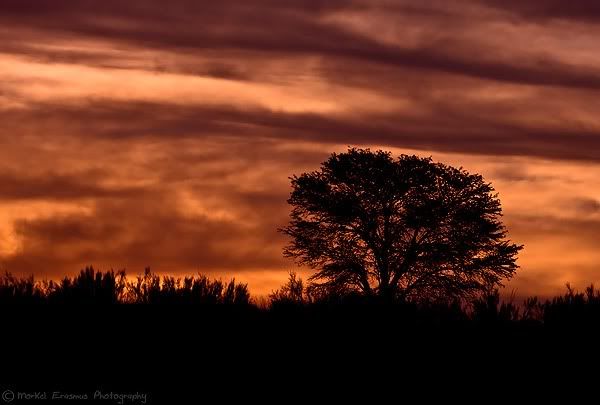
Sunset was a blinder this evening!


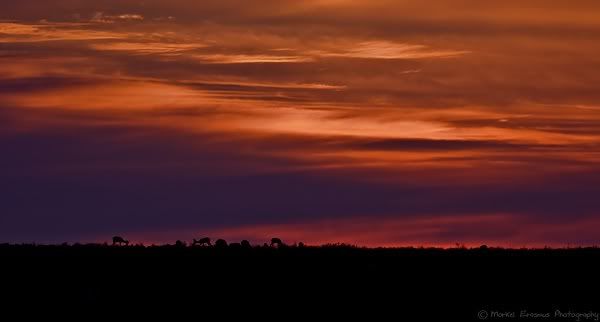
The next morning, we made sure were out of the gates at first light. The dawn awaited us...with some springbok gazelle grazing on the ridges of the dunes.


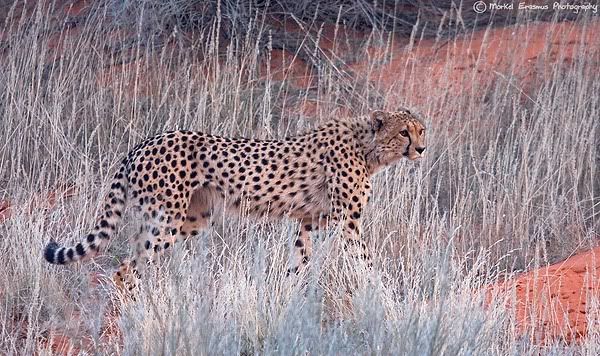
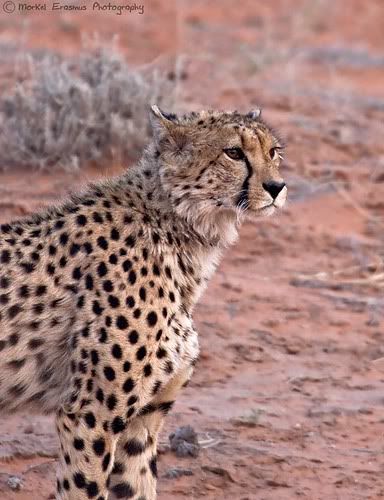
We hadn't gone 1km from the camp, when we spotted movement next to the road. Cheetah!!
Over the next couple of years I would develop a very special relationship with the Cheetahs of this semi-desert. Amazing sightings are still to come in this report and those reports I still need to do! Watch this space...

It was a lone male, walking purposefully, no doubt in search of an early morning meal.


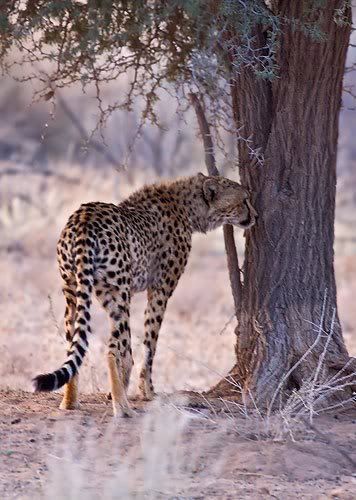
He crossed the road and smelled the nearest tree trunk where another Cheetah had probably left a scent-marking the previous day. The sun wasn't even up yet, and the Kalahari had delivered!


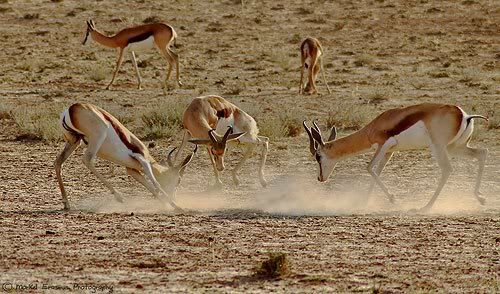
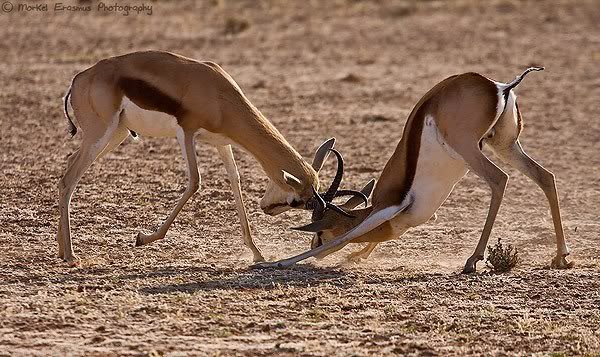
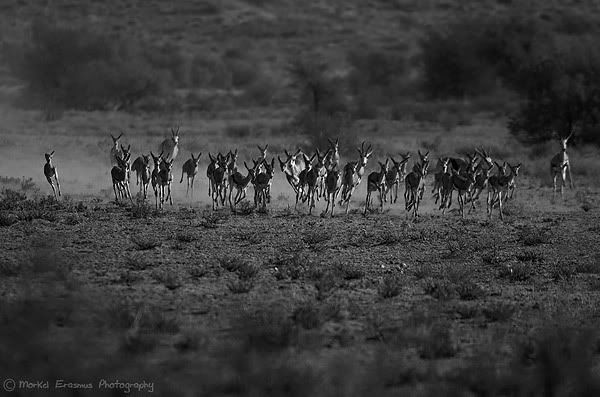
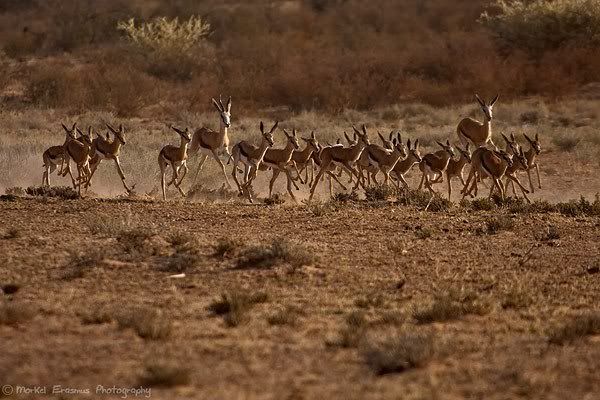
Twee Rivieren is directly translated as "Two Rivers", with good reason. Most of the driving roads in the Kgalagadi are set within the arid riverbeds of the Auob and Nossob rivers. Shortly after leaving Twee Rivieren you are faced with a decision - either go north towards Mata-Mata and the Namibian border in the Auob river, or go Northeast towards the Botswanan side in the Nossob river. On this morning we were forced to take the Auob as a large section of the road between Twee Rivieren and Nossob was under re-construction. We soon came upon a large herd of Springbok gazelle going about their business. This business included males play-fighting and the young fawns running up-and-down the riverbed. It was great fun to watch.


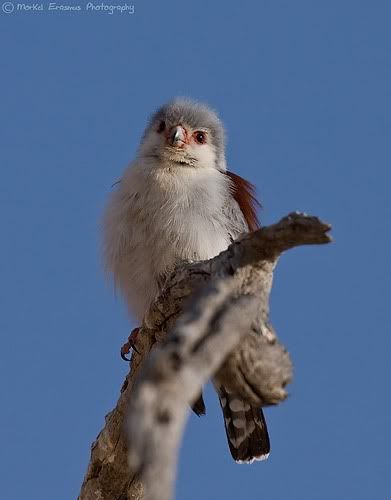
I also ticked off my first sighting of Pygmy Falcon here. This is Africa's smallest raptor.


Blue Wildebeest are very common in this part of the world. This herd was coming down from the dunes into the Auob riverbed to slake their thirst.


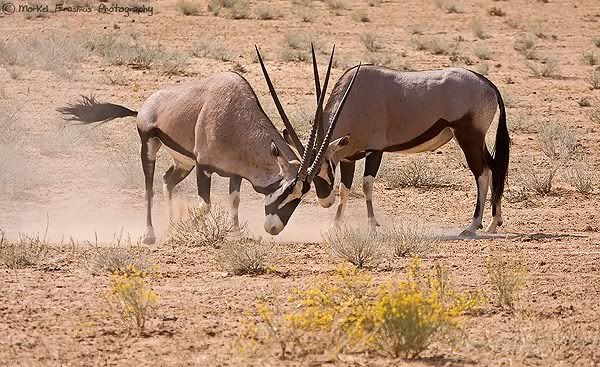
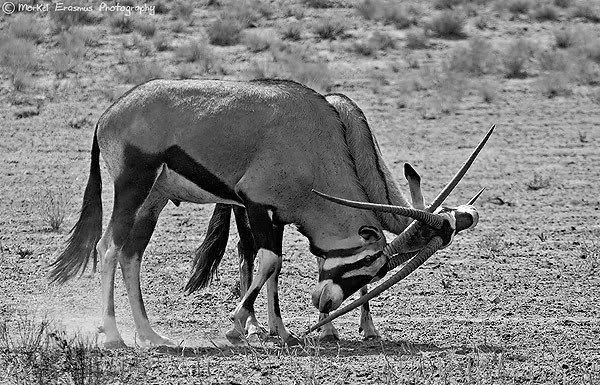
The old name for this Park (for the South African section) was the Kalahari Gemsbok National Park. Gemsbok is a southern African term for our local genus of Oryx. Needless to say there are quite a few of them in the Park. Gemsbok/Oryx actually don't need standing water to survive here. They get enough of their moisture from the dew in the mornings and they also have an internal cooling system whereby they can regulate their body temperatures by altering their breathing.


These 2 were having a tiff. With their rapier-shaped horns, it's no wonder that they can provide a deadly blow to predators who threaten them.


...to be continued...


Morkel Erasmus

Wednesday, 21 March 2012

Tracking Kalahari Lions

I thought it was time for another "proper" blog post, don't you think? So much has been going on in the hustle and bustle of my life that I have again started neglecting my blog - tsk tsk tsk. Things have been hectic busy on this side. Did I mention we are expecting our 2nd child later this year? We recently found out that we are expecting a boy, so soon there will be 2 pairs of little feet to pitter-patter around the house. Having a family is such a blessing and privilege and I am fortunate to have such a loving and supporting wife who knows how obsessive I can be about my passions.

After visiting the Kgalagadi Transfrontier Park again recently (you should know by now how I love the place), I was reminded by a recent experience of one of the exciting aspects of being on safari there...tracking lions. Oftentimes in the Kgalagadi I have found fresh lion tracks and used some latent knowledge of tracking handed down by my father when I went hunting with him as a boy, and some knowledge of the predators' behaviour to eventually find a good lion sighting on my own.

Now it sounds cliche, but unlike the private lodges where there's a tracker sitting on the front of the vehicle, in this park it's all self-drive and you can only track animals that have actually walked in the road. So upfront it sounds quite straight-forward...but there's actually a lot to it.

1. First off - you need to be out of the gates FIRST in the morning! If you're not, the guy who made it out before you will probably just drive over any fresh tracks there may be. Male lions are frequently on patrol in the early hours of the morning, but it's not uncommon to find moms with cubs or even entire prides on the road or close to it.

2. You need to know what a lion track looks like. Think your kitty cat's feet multiplied by 20. It helps to familiarise yourself with the various predator tracks so you can distinguish between them.

3. You need to be able to tell if it's fresh or old. If it rained last night, and there are tracks without drops in them - FRESH. If there's lots of loose sand in the track and it's hard to discern the shape - OLD. If the sand is scrunched up on the sides and the track is nice and clear - FRESH.

4. You need to have a keen eye. They may not necessarily be in the road. They may be lying under a bush close by or they may be a little way off to the side in long grass.

5. You need to be able to read the direction of the tracks and make a prediction on where they were going if the tracks leave the road...they may have just taken a shortcut and ended up at a nearby waterhole.

6. You need to be patient. On my recent trip I was tracking a certain pride of lions for 4 days consecutively before I found my first "usable" photo opportunity.

7. It's not just about tracking lions. I have often found leopard, cheetah and hyena tracks too, and these also gave me a good idea of which predators were hanging around certain territories with a view of looking for them later, and even finding them indirectly as their tracks found earlier made me alert to their general presence in the area.

Here are a few images I have captured of lions in the Kgalagadi which I found by following, reading and interpreting their tracks over the last 3 years or so...


I hope you enjoyed this short post about something which makes self-drive safaris in South Africa's National Parks so rewarding and exciting for me.

Cheers!

Morkel Erasmus