Some of you may recall that I have been posting some WAY overdue trip reports on my blog as well. I am still far behind, but I thought it best to get going again...my last report was a series of posts on a trip with my wife to the Kruger National Park in 2009 - you can read them HERE.
Let's kick this one off then - back in February of 2010, my wife and I were invited to spend 2 nights in the luxurious Leopard Hills Private Game Reserve within the Sabi Sands Game Reserve (part of the Greater Kruger ecosystem). It's one of the most prolific areas for leopard and lion viewing, and we were pretty excited to visit our friend Marius Coetzee who was at that time a full-time field guide at the lodge. We decided to latch a few nights in the Kruger National Park to the back-end of this trip, and we also left home VERY early on the morning of 18 February so as to be able to reach the Malelane gate and make our way through the southern section of Kruger before checking in to the Sabi Sands around lunchtime.
As always, clicking on the photos displays them at the best resolution and sharpness, against a nice dark backdrop :)
It was an overcast morning with a slight drizzle throughout. The animals didn't look overtly happy either. Our first find on our short drive through Kruger was a herd of impala rams. These two were nudging closer in the rain.
This white-backed vulture was also looking very sorry for himself...
We came across the remains of a kill. It was too far off to see what the carcass was - but the rain did not deter the spotted hyaenas and the vultures to contest each other for the remains...
Summer is also the time when beautiful migrant birds like the European Roller are "in town"!
The view from this famous lookout "kopje"/inselberg on the road between Malelane and Skukuza is always lovely - and even more so in the lush summer months.
It was a quiet drive, but nice nonetheless. There was one more obligatory stop before we would leave the Kruger Park through Kruger Gate and enter the Sabi Sands - the famous Lake Panic bird hide close to Skukuze...despite the rain.
A lovely Malachite Kingfisher was following his fishing pattern despite the drizzle.
This was my first outing using the Nikon D3s (at that time the top of the range Nikon DSLR and the undisputed king of low light photography). It was this trip that convinced me that somehow I would have to get my hands on one of these cameras on a permanent basis (it was a loan unit from Nikon South Africa).
These photos below were taken at settings like ISO-4000, and they are also significant crops (the longest lens I had to use on this trip was the Nikkor 200-400mm VR which is not ideal for photographing small birds like these).
We arrived at Leopard Hills and checked into our rooms - what opulent luxury!!
This was the view from our bath...
After having our lunch and taking a nap, we prepared for our first afternoon drive...which was delayed due to a sudden heavy thunderstorm moving through the area. When we eventually did get out on our drive, we were met by the most wonderful scene...a herd of Cape Buffalo was lying in an open patch called the Ximungwe Clearing, and above them was a spectacular rainbow!
The rest of the afternoon was eventful - with an enjoyable sighting of the Hlaba N'kunzi leopardess and her cub feasting on a kill, albeit in a dense thicket which made photography nigh impossible. We eventually enjoyed a lovely sundowner somewhere out in the bush.
What would the next day hold??
Morkel Erasmus
Showing posts sorted by relevance for query kruger. Sort by date Show all posts
Monday, 4 August 2014
Tuesday, 24 December 2013
Kruger: December 2009 (Part 9)
We booked into Punda Maria for our one-night sojourn and eventually made it out for a late afternoon drive around the kopje. These are some of the sights we enjoyed on this last afternoon drive...
An ugly bugger (Marabou Stork):
A big boy:
Pumbaa and his friend:
A tender Impala moment:
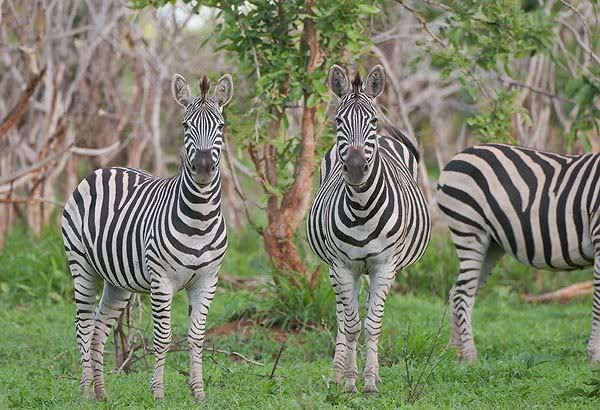
Inquisitive Zebras:
Our last dinner under the Kruger stars was nice but also sad. It's always sad to be leaving the bush and going back to the rat-race. The next morning I decided to do something bold - with the gates opening at 04h30 already, I decided to drive south as far as we can get before the gates close at 18h00, and only then take the 4 hour drive home. Talk about maximising your time in the field, haha.
These are the sightings we enjoyed on this long, but rewarding drive from Punda Maria to the Paul Kruger Gate close to Skukuza.
Open-Billed Stork:
Yellow-Billed Kite:
Same raptor being harrassed by a Fork-Tailed Drongo:
The ever-present Glossy Starling (a Kruger stalwart):
Impalas locked in a fierce contest:
Cute warthog piglets:
The high level of the Olifants river this particular year:
Compare the 2 scenes I posted above with the same river, from the same viewpoint, 5 months earlier (July 2009)!
We had a long way to go still - so we carried on southwards...
Mud-bath:
Stork and Elephant:
The lovely Carmine Bee-Eater:
The lovely Lilac-Breasted Roller:
We reached the Paul Kruger gate around 5pm (and got home by about 9pm!). I am looking forward to possibly fitting in another trip to the northern reaches of the Kruger National Park in the next few months. I hope you enjoyed these trip reports...I've got a few to catch up on so there are more coming!
Have a blessed Christmas time with your families and loved ones!!
God bless you all.
Morkel Erasmus
An ugly bugger (Marabou Stork):
A big boy:
Pumbaa and his friend:
A tender Impala moment:
Inquisitive Zebras:
Our last dinner under the Kruger stars was nice but also sad. It's always sad to be leaving the bush and going back to the rat-race. The next morning I decided to do something bold - with the gates opening at 04h30 already, I decided to drive south as far as we can get before the gates close at 18h00, and only then take the 4 hour drive home. Talk about maximising your time in the field, haha.
These are the sightings we enjoyed on this long, but rewarding drive from Punda Maria to the Paul Kruger Gate close to Skukuza.
Open-Billed Stork:
Yellow-Billed Kite:
Same raptor being harrassed by a Fork-Tailed Drongo:
The ever-present Glossy Starling (a Kruger stalwart):
Impalas locked in a fierce contest:
Cute warthog piglets:
The high level of the Olifants river this particular year:
Compare the 2 scenes I posted above with the same river, from the same viewpoint, 5 months earlier (July 2009)!
We had a long way to go still - so we carried on southwards...
Mud-bath:
Stork and Elephant:
The lovely Carmine Bee-Eater:
The lovely Lilac-Breasted Roller:
We reached the Paul Kruger gate around 5pm (and got home by about 9pm!). I am looking forward to possibly fitting in another trip to the northern reaches of the Kruger National Park in the next few months. I hope you enjoyed these trip reports...I've got a few to catch up on so there are more coming!
Have a blessed Christmas time with your families and loved ones!!
God bless you all.
Morkel Erasmus
Saturday, 16 January 2010
There be giants here...
This past December we spent some time in the Kruger National Park - oh wait, it's now called the 'Greater Kruger Transfrontier Park'. The summer sees the bushveld transformed from the dull yellow and brown of winter into a lush green paradise. This also makes spotting the wildlife a little trickier, but it also brings a lot of beautiful migrant birds from the Northern Hemisphere.
We headed north to avoid the hustle and bustle of the southern part of the park. The north is quieter - not just in terms of visitor numbers but the game is also more spread out. But the sightings you DO get are a lot better since most of the time there isn't a traffic jam at any of the sightings.
The north of Kruger is also where most of the larger elephants roam. The vegetation suits them - and if you ask me - the smaller number of tourists also suits them...
We came across this bulky bull north of the Shingwedzi rest camp on a rainy day when we were the only ones driving out.
Applying HDR to this picture helped me pull a lot of detail from the moody rain clouds behind the elephant, as well as from its skin texture. I also quite like this shot as a black and white conversion.
I could spend hours in these tranquil forests.
So, the next time you book a trip to Kruger, don't just hang around the nexus of Skukuza and Lower Sabie, even Satara. Head north, and let your soul unwind...
Till next time...take care.
Morkel Erasmus
We headed north to avoid the hustle and bustle of the southern part of the park. The north is quieter - not just in terms of visitor numbers but the game is also more spread out. But the sightings you DO get are a lot better since most of the time there isn't a traffic jam at any of the sightings.
The north of Kruger is also where most of the larger elephants roam. The vegetation suits them - and if you ask me - the smaller number of tourists also suits them...
We came across this bulky bull north of the Shingwedzi rest camp on a rainy day when we were the only ones driving out.
As you travel to the utmost northern part of Kruger, you meet less and less people, and you also wind your way to a magical place called 'Pafuri'. This is a region of lush riverine forests, exotic birdlife and the ruins of ancient civilizations. The Levuvhu river winds through a dense fevertree forest and ends up joining the Limpopo river at a junction called "Crook's Corner". This 'corner' gained its notorious name from the fact that many fugitives from justice came here to escape the arms of the law of South Africa, Mozambique and Zimbabwe (then Rhodesia). At the time the place was literally a no-man's land and all the fugitives would sit and watch as the law-enforcement from the 3 countries fought over who could arrest them.
Here are some shots I took while driving through the area. You are not allowed to get out of your car so these were all taken from the car window.
I could spend hours in these tranquil forests.
So, the next time you book a trip to Kruger, don't just hang around the nexus of Skukuza and Lower Sabie, even Satara. Head north, and let your soul unwind...
Till next time...take care.
Morkel Erasmus
Labels:
big 5,
elephant,
HDR,
holiday,
Kruger,
Photography,
safari,
South Africa,
wildlife
Tuesday, 6 September 2011
When it all comes together
Hello everyone.
I promised you a more lengthy blog post after my return from the Kruger National Park. Well, here it is!
I had a wonderful experience one afternoon that sure taught me a lot, and could also prove beneficial to those reading. A lot is said about patience being one of the greatest virtues of nature/wildlife photography...patience, preparation and knowledge of your subject matter. On this occasion, I had a little more patience than I normally have, and my knowledge of the subject matter enabled me to prepare for an amazing photographic experience.
We had come down from the far north of the Kruger Park, having already spent 6 nights in the Park and narrowly missing out on good leopard sightings quite a few times. Those who know these cats will know that they are very secretive and often a good leopard sighting can last only 5 minutes or so. The bush in the Kruger Park can also be quite dense in a lot of places, meaning that if the cat is not in the road or right next to it, the most you are going to see is a few spots anyway.
To give you an idea...at that stage this was our only "legit" leopard sighting to date - a youngster left alone by its mother in a dense mopani thicket while she went hunting:
![]() |
| Nikon D3s | Nikkor 500mm f4 VR-II | f4.0 | 1/1000 SS | ISO-560 |
Now to get back to the story...we booked into the Olifants rest camp for the night (our 7th night of a scheduled 8). This camp is located in the central region of Kruger, and our next night would be spent in Satara which is even more central and a great region for wildlife viewing with open plains, riverine forests and plenty of life around. Our neighbours on this particular evening told us of an impala kill that was tucked into a tree by the side of the main road between the camps (and that the kill was still untouched by the time they went past there that particular afternoon). We had come from the north and were thus oblivious of this development. Knowing that there was a very good chance that the leopard would return during the night to feast on its meal, and also then a very good chance that it would be there early morning, I planned to head down there at first light and hope for the best.
The next morning I did just that...it was a good 30km from Olifants camp so I only got there at about 07h00 after the gates opened at 06h00. The kill was in the tree allright...but no leopard in sight!! I had always dreamed of getting a good photo of a leopard climbing up a tree.
The tree was nicely positioned for a shot of the leopard climbing up the tree. I spent about 30minutes waiting for the leopard to show itself, when someone who was also parked at the kill told me about some male lions further south that were lying next to the road. I decided to go and find them before checking back at the tree on my way back to Olifants camp. It occurred to me that this tree was to the East, meaning that by late afternoon the golden light would hit it dead-on as I was viewing it. I salivated at the thought of the leopard coming back later in the day and scaling the tree
When I returned from the lions I found the kill exactly in the position I had left it in. I went back to the camp to fetch my wife and daughter and our stuff for the move to Satara rest camp which would be our last night in the park. Again, on the way down past the kill it was still as I left it. We headed south, booked into Satara and had a bite to eat. By this time the weather had turned from lovely to pretty murky. It was overcast and starting to drizzle. Still, this was our last 'full day' in the Park and we had to decide where we would head off to for our afternoon drive.
I was haunted by the mental image of that leopard scaling the tree and me not being there to photograph the action...so we decided to stock up on refreshments, load enough toys into the car for our little girl to not get bored quickly, and set off on the 25 odd kilometer drive towards the tree. It was 13h30, and there were no other cars parked there at that stage (also, no leopard yet!). I knew which spot I needed to park in - the only one with a perfect view of the tree at an angle that made it possible to photograph the "climb" and be able to do it regardless of whether the cat decided to ascend from the left, right or front of the tree. Obviously if it decided to scale the trunk from the back I would be screwed - but hey, you have to keep some hope stored up if you want to "bring home the bacon" in nature photography! The kill was in exactly the same position as it had been all day...a good sign? Or not? Was this shy cat even coming back today?
And so the waiting game began...
14h00 came...no leopard...
15h00 came...no leopard...
16h00 came...no leopard...
By now we had accumulated a following. There were quite a few vehicles parked out with us, and many more were coming and staying for a few minutes and then going again...but no leopard...
One of the characteristics of Kruger is the visitors/tourists sharing information with each other on sightings and the whereabouts of animals. Many who stopped at our car inquired as to what we were looking at...most thought it was something on the ground - which was humorous as the kill was quite obvious in the tree about 60m from the road.
One particular man asked me about it, I pointed it out to him, and he proceeded to tell his wife: "There's a buck in that tree, but it's already dead"
doh...to which I had to restrain myself from replying:
"If you drive a further 2 clicks south you will find one who climbed in all by himself and is sitting in the tree drinking a beer!"
Anyway...16h30...no leopard...16h45...still no leopard...I knew from the start that this was a "six or nix" venture. It was either going to show, or it wasn't. I was either going to have my dream image...or I was going back to camp with an empty memory card. I knew we had to get out of there by 17h30 at the latest, as it would be a solid 30-minute drive back to camp at the speed limit of 50km/h.
Gear-wise I had to make a decision. Up to this point I was ready to shoot the action with the Nikon D3s and the Nikkor 500mm f4 VR-II with the Nikon TC-14E 1.4x teleconverter attached. This gave me some much-needed reach towards the position of the tree on my full frame camera body. The problem I was facing was that with sunset approaching and the weather still heavily overcast, I would need to get as much light as possible to reach my camera's sensor when I tripped the shutter. I decided to remove the teleconverter and shoot the 500mm 'wide open' at an aperture of 4 (I had a maximum aperture of 5.6 with the converter attached).
At around 17h00 one of the vehicles a little behind us flashed its headlights and the driver indicated to his right...the leopard must have arrived back there! We had to look hard since there were a few small shrubby trees next to us which obscured the view to the Southwest. Finally we noticed its white belly through the branches. It was lying down under a shrub some distance into the veld. It was SOOO tempting to try and maneuver in reverse to get a glimpse of it, especially considering it might not even approach the tree at all! In the end we decided to hedge our bets on the hope we had cherished all day, and stayed put (besides, if we did move we would lose our vital positioning for the ascent!).
The leopard seemed in NO hurry to get up and come towards the tree. One moment it was lying flat on its side. The next moment lifting its head. The next moment yawning. Then lying down flat again...needless to say it was torture...
After what felt like hours, eventually I could see the signs that it was getting up to move. It stood up and walked slowly towards the tree.
The next morning I did just that...it was a good 30km from Olifants camp so I only got there at about 07h00 after the gates opened at 06h00. The kill was in the tree allright...but no leopard in sight!! I had always dreamed of getting a good photo of a leopard climbing up a tree.
The tree was nicely positioned for a shot of the leopard climbing up the tree. I spent about 30minutes waiting for the leopard to show itself, when someone who was also parked at the kill told me about some male lions further south that were lying next to the road. I decided to go and find them before checking back at the tree on my way back to Olifants camp. It occurred to me that this tree was to the East, meaning that by late afternoon the golden light would hit it dead-on as I was viewing it. I salivated at the thought of the leopard coming back later in the day and scaling the tree
When I returned from the lions I found the kill exactly in the position I had left it in. I went back to the camp to fetch my wife and daughter and our stuff for the move to Satara rest camp which would be our last night in the park. Again, on the way down past the kill it was still as I left it. We headed south, booked into Satara and had a bite to eat. By this time the weather had turned from lovely to pretty murky. It was overcast and starting to drizzle. Still, this was our last 'full day' in the Park and we had to decide where we would head off to for our afternoon drive.
I was haunted by the mental image of that leopard scaling the tree and me not being there to photograph the action...so we decided to stock up on refreshments, load enough toys into the car for our little girl to not get bored quickly, and set off on the 25 odd kilometer drive towards the tree. It was 13h30, and there were no other cars parked there at that stage (also, no leopard yet!). I knew which spot I needed to park in - the only one with a perfect view of the tree at an angle that made it possible to photograph the "climb" and be able to do it regardless of whether the cat decided to ascend from the left, right or front of the tree. Obviously if it decided to scale the trunk from the back I would be screwed - but hey, you have to keep some hope stored up if you want to "bring home the bacon" in nature photography! The kill was in exactly the same position as it had been all day...a good sign? Or not? Was this shy cat even coming back today?
And so the waiting game began...
14h00 came...no leopard...
15h00 came...no leopard...
16h00 came...no leopard...
By now we had accumulated a following. There were quite a few vehicles parked out with us, and many more were coming and staying for a few minutes and then going again...but no leopard...
One of the characteristics of Kruger is the visitors/tourists sharing information with each other on sightings and the whereabouts of animals. Many who stopped at our car inquired as to what we were looking at...most thought it was something on the ground - which was humorous as the kill was quite obvious in the tree about 60m from the road.
One particular man asked me about it, I pointed it out to him, and he proceeded to tell his wife: "There's a buck in that tree, but it's already dead"
doh...to which I had to restrain myself from replying:
"If you drive a further 2 clicks south you will find one who climbed in all by himself and is sitting in the tree drinking a beer!"
hahaha
Anyway...16h30...no leopard...16h45...still no leopard...I knew from the start that this was a "six or nix" venture. It was either going to show, or it wasn't. I was either going to have my dream image...or I was going back to camp with an empty memory card. I knew we had to get out of there by 17h30 at the latest, as it would be a solid 30-minute drive back to camp at the speed limit of 50km/h.
Gear-wise I had to make a decision. Up to this point I was ready to shoot the action with the Nikon D3s and the Nikkor 500mm f4 VR-II with the Nikon TC-14E 1.4x teleconverter attached. This gave me some much-needed reach towards the position of the tree on my full frame camera body. The problem I was facing was that with sunset approaching and the weather still heavily overcast, I would need to get as much light as possible to reach my camera's sensor when I tripped the shutter. I decided to remove the teleconverter and shoot the 500mm 'wide open' at an aperture of 4 (I had a maximum aperture of 5.6 with the converter attached).
At around 17h00 one of the vehicles a little behind us flashed its headlights and the driver indicated to his right...the leopard must have arrived back there! We had to look hard since there were a few small shrubby trees next to us which obscured the view to the Southwest. Finally we noticed its white belly through the branches. It was lying down under a shrub some distance into the veld. It was SOOO tempting to try and maneuver in reverse to get a glimpse of it, especially considering it might not even approach the tree at all! In the end we decided to hedge our bets on the hope we had cherished all day, and stayed put (besides, if we did move we would lose our vital positioning for the ascent!).
![]() |
| The view of the leopard initially from where we had been parked all afternoon...would you have moved? |
After what felt like hours, eventually I could see the signs that it was getting up to move. It stood up and walked slowly towards the tree.
![]() |
| The leopard starts its approach. These images are heavily cropped. |
It was a young male, probably kicked out by its mother a few months ago and learning to fend for itself and establishing a territory. He did some scent-marking, then proceeded to walk around behind the tree - and guess what?? He lied down again...
17h15. I went ahead and captured some images. I still had to prepare myself mentally for the possibility that he would not climb the tree before we had to turn around and head back for the night. These images came out much better than I expected and this sighting as a whole turned out to be a great test for my Nikon D3s and its famed low-light performance. I had it set on "auto-ISO" and Manual Exposure mode, meaning that I chose the Shutter Speed and Aperture settings I wanted to use, and the camera would select the ISO sensitivity automatically based on the light meter reading and whether I was opting to adjust the exposure compensation bias up or down.
These images are still very heavily cropped - and I was amazed by the detail retained given the crops and the high ISO settings used.
![]() |
| Nikon D3s | Nikkor 500mm f4 VR-II | f4.0 | 1/200 SS | ISO-2800 |
![]() |
| f4.0 | 1/320 SS | ISO-4500 |
![]() |
| f4.0 | 1/200 SS | ISO-8000 |
17h20...I was getting agitated now...why doesn't the leopard want to eat? It hadn't been back at the kill since pre-dawn, and had to be slightly hungry? He even looked longingly up at the impala in the tree at one stage.
17h21...the leopard gets up...adrenaline starts pumping through my veins...this is the moment I had been playing over and over in my mind all day, and all my preparation made and chances taken were now going to culminate in these next few seconds...now to focus on not screwing it up!!
I quickly metered the light with the camera and took another split-second decision. My chosen shutter speed for the action was 1/400 which was quite slow considering I was using a 500mm focal length (the general rule is you need to have a SS of at least 1/focal-length to get a decently sharp image, though having Nikon's Vibration Reduction technology built into my lens meant I could sacrifice some more). These settings were giving me an ISO of 8000. I wanted to be certain of at least ISO-4000, and therefore decided to half my shutter speed to 1/200. It was a risk! Leopards can climb trees very quickly. If the action was going to happen too fast I would get it all blurry. Then again, having some elements (ideally the paws) slightly blurred would add greatly to the mood/story of the photo. The decision was made for me by the poor quality of light available, and I stuck to my guns and hoped my technique in following the leopard up the tree with the focus point would pull me through. I rotated my camera into the vertical shooting position to get the best framing of the action, and pre-focused on the bark of the tree trunk. I knew that at this focusing distance I should get sufficient depth-of-field this way and it would be easier to keep focus locked during the climb. The D3s would fire at 11 frames per second...how many of those frames would even be usable, if any??
He walks towards the tree!! /things seem to happen in slow-motion and fast-forward at once...it approaches the tree from the right...walks around the front of the tree, all the while looking up at the impala. I had anticipated that he would ascend from the right of the tree since that part of the trunk was sloping towards the left, making it an easier climb. I knew I had seconds before he would jump...and I was as ready as I would ever be...
...breath in...
...breath out...
...leopard looks up...
...squats down...
...shuffles hind quarters...
...breath in...
...breath out...
...leopard looks up...
...squats down...
...shuffles hind quarters...
...breath in...
and there he goes!!!
![]() |
| f4.0 | 1/200 SS | ISO-5000 |
![]() |
| f4.0 | 1/200 SS | ISO-5600 |
![]() |
| f4.0 | 1/200 SS | ISO-5600 |
![]() |
| f4.0 | 1/200 SS | ISO-4000 |
![]() |
| f4.0 | 1/200 SS | ISO-2800 |
...breath out...!!!
What a rush! A whole day's waiting, hoping, planning came down to 6 or 7 frames of action...
The leopard settled in on top of its quarry and proceeded to start feeding...
![]() |
| f4.0 | 1/200 SS | ISO-2800 |
![]() |
| f4.0 | 1/200 SS | ISO-3200 |
After firing off a few frames of the leopard feeding, I needed to just take a moment to enjoy what we were watching. So often we get caught up in the moment of taking the photographs that we forget to "be there" to witness the natural history taking place, to create memories with our loved ones with us out on safari, and to soak up the feeling of being in the bush. This whole afternoon had come to this...and I loved it!
17h30...We turned around and headed back to Satara as the rain started pouring down ever so lightly...what a day!
This sighting will probably end up being one of my most memorable ones. Not just because of what we witnessed and the excitement of having a beautiful leopard like this scale a tree out in the open savannah of Africa, but also because of the nature of the sighting. The planning the night beforehand. The visualisation of the shot from the moment I laid eyes on the tree. The waiting, waiting, and more waiting. The thrill of trying to anticipate the leopard's behaviour. The challenge of working in absolutely horrendous light and pushing my technical skills, knowledge and my gear to the limits. And lastly because this was in Kruger....a place I had been coming to since I can remember. A place with so many special memories, and so many surprises around the corner...anything can happen! There are many luxury safari lodges relatively close to where I took this photo, and they will show you leopard sightings you can only dream about...sometimes multiple individual cats on the same day...and though I love being on safaris like that, there's something about getting images like these in a place like Kruger where you have to "make your own luck" that just proves to be ever-so-much-more satisfying...
In the end, it's experiences like THIS that make me want to get back out there in the bush...and see what's around the next bend in the road...
I hope you were inspired by this account...and I certainly hope it wasn't too long-winded. I probably made up for all those quick blog posts of the past few months here.
Anyway - would love your feedback...and if you have similar stories to share, please do so by dropping a comment on this post.
Happy shooting...
Morkel Erasmus
Labels:
Africa,
big5,
Kruger,
leopard,
lesson,
low light,
nature,
Nikon D3s,
Photography,
safari,
South Africa,
wildlife,
wisdom
Subscribe to:
Posts (Atom)


.jpg)
.jpg)

.jpg)